
A track hoist system solves this by combining a hoist unit with a fixed overhead rail, creating a controlled, repeatable path for lifting and moving materials. Instead of reinventing the wheel on every shift, operators run the same load path safely, every time.
This guide covers the main types of track hoist systems, their benefits, what drives cost, and how to pick the right configuration for your facility.
Key Takeaways
- Track hoist systems pair a chain or wire rope hoist with a fixed rail for controlled, horizontal load movement
- Common configurations include monorail, bridge/gantry, and jib-mounted systems, each suited to different floor layouts
- Cost hinges on load capacity, duty cycle, span length, and installation complexity
- Matching duty rating to actual usage frequency prevents premature wear and unplanned downtime
What Is a Track Hoist System?
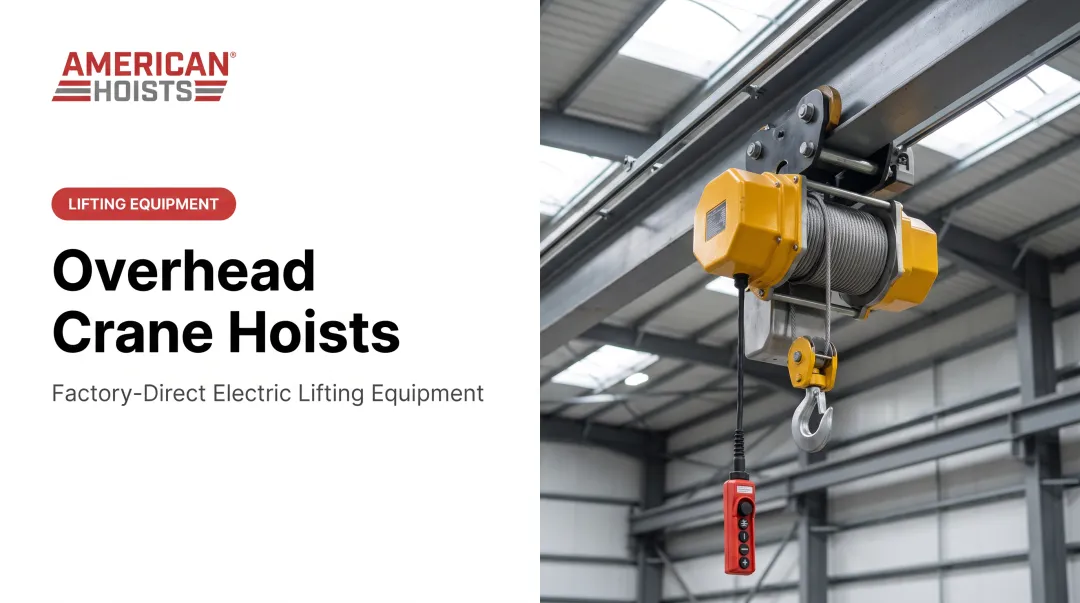
A track hoist system is a fixed overhead rail along which a hoist trolley travels to lift and carry loads horizontally. The rail is most often an I-beam, patented enclosed track, or box beam. The trolley rides the rail while the hoist below handles vertical lifting.
Core components include:
- The rail/track – fixed to the ceiling structure, guiding all horizontal movement
- The trolley – rides the rail and carries the hoist
- The hoist – electric chain or wire rope unit that provides vertical lift
- End stops or bumpers – prevent the trolley from running off the rail's ends
How Track Hoists Differ From Bridge Cranes
A standard bridge crane uses a girder that travels across two parallel runways, giving full X-Y coverage over a floor area. A track hoist system, by contrast, is typically simpler: a single, defined travel path rather than open two-axis coverage. Think point A to point B, repeated reliably, rather than anywhere-on-the-floor flexibility.

That simplicity is often the appeal. Manufacturers moving materials between two workstations, loading a machine, or feeding an assembly line don't need full bridge coverage. They need a dependable path.
Built for the Duty Cycle, Not Just the Load
A track hoist rated for occasional use won't hold up in a facility running three shifts. Even on a simple point-to-point path, systems should be engineered to the actual duty cycle, not just the maximum weight they need to handle. That means how often the equipment lifts, how close to rated capacity, and how many hours it runs per day.
Types of Track Hoist Systems
Monorail Track Hoist Systems
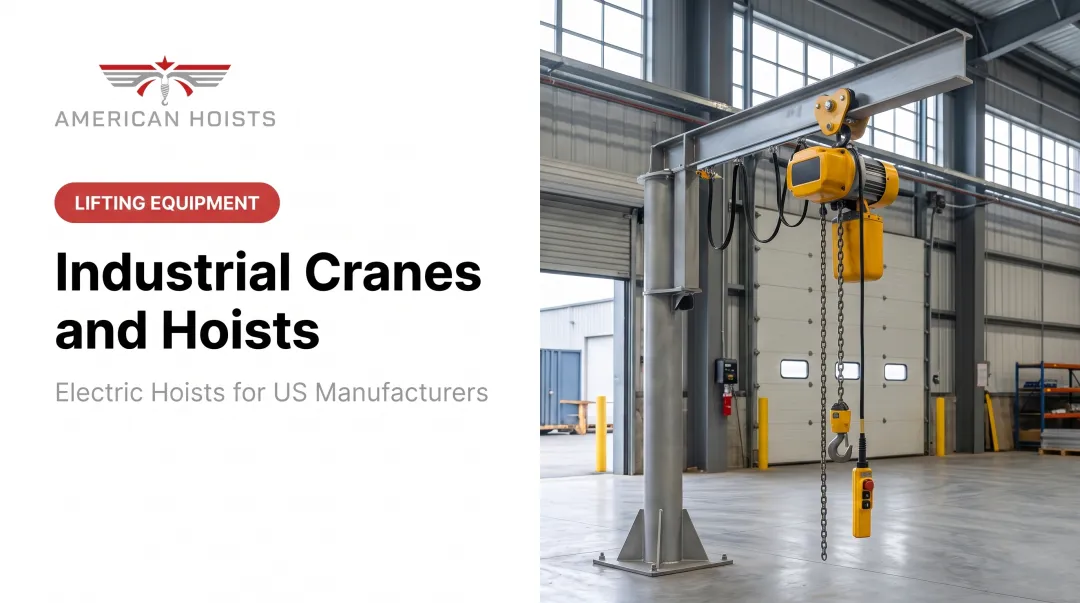
Monorail systems use a single straight or curved rail for linear, point-to-point movement. They're a strong fit for narrow work areas where a load consistently travels the same short route, such as feeding parts from a staging area to a single machine.
Bridge/Gantry Track Systems
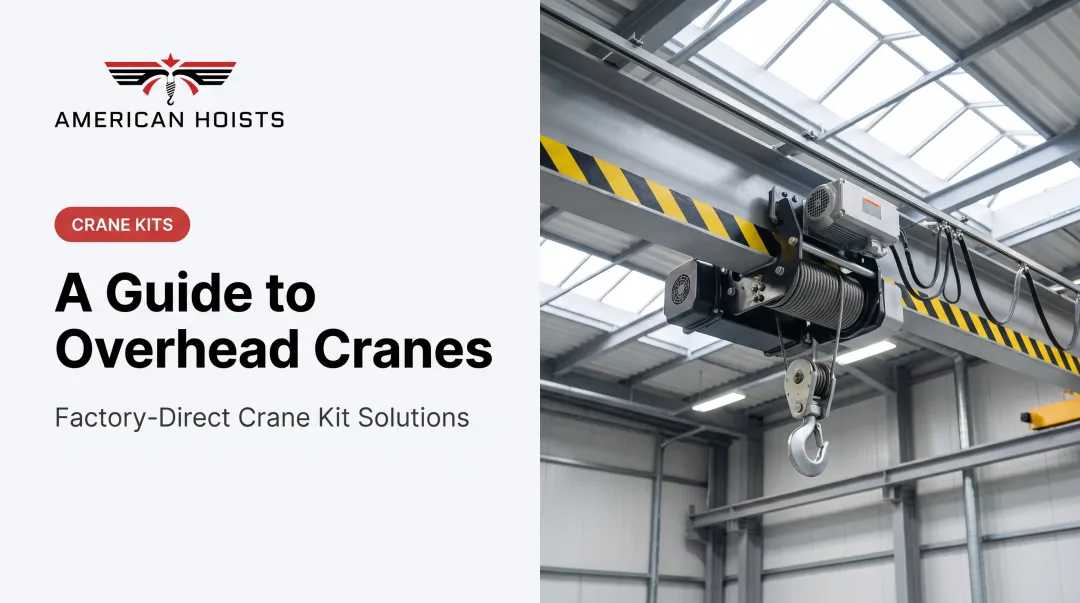
Bridge and gantry configurations add a traversing bridge across two parallel rails, giving X-Y coverage across a larger floor area, similar in concept to a full bridge crane. Common configurations include:
- Push or motorized bridges
- Push or motorized trolleys
- Top-running or underhung runway styles
- 10 to 60-foot spans with 1/8 to 10-ton capacities
Availability and specifications vary by supplier and current inventory, so confirm current options with a specialist before finalizing a floor plan around this configuration.
Jib and Wall-Mounted Track Systems
Jib cranes serve smaller, localized lifting needs where full ceiling coverage isn't necessary. American Hoists' wall-mounted jib cranes range from 1/4 ton to 5 tons, with jib lengths up to 20 feet and 180-degree rotation. Foundationless freestanding models cover 1/4 to 5 tons, useful when you can't anchor to a wall or column.
Enclosed Track vs. Patented Track Rail
Enclosed track surrounds the trolley wheels, keeping dirt and debris off the running surface. That design runs smoother and quieter, which suits precision work. Patented (open) track is more economical and typically supports higher capacities, so shops often choose it for heavy-duty manufacturing where capacity matters more than low noise.

Key Benefits for Manufacturers
Reduced manual handling risk. Manual material handling contributes heavily to musculoskeletal disorder cases. BLS data on manufacturing injuries recorded 9,760 overexertion cases from lifting or lowering in private manufacturing during 2020 alone. Mechanizing repetitive lifts on a fixed track cuts that exposure on every cycle.
More predictable throughput. A defined travel path means operators aren't repositioning portable lifting gear between cycles. CMAA case studies show the payoff: Great Lakes Shipyard installed a bridge crane with two independently operated hoists, letting multiple fabrication teams work simultaneously around a plasma-cutting area.
Fewer disruptions from equipment failure. A system engineered for its actual duty cycle, not just its maximum capacity, holds up better under continuous use. American Hoists' Harrington NER chain hoists carry a 60-minute duty rating and H4 hoist classification, with Class B insulation and thermal motor protection. Starke SMW wire rope hoists carry the same H4 ASME duty class for heavy industrial applications.
Reclaimed floor space. Overhead systems keep material handling off the ground. That frees floor space for machinery, staging, or foot traffic instead of forklift lanes and parked portable lifts.

Factors That Affect Track Hoist System Cost
Several variables drive total project cost, and understanding them helps you compare quotes on equal footing.
| Cost driver | Why it matters |
|---|---|
| Load capacity & duty cycle | Heavier, more frequent lifts require stronger motors and components |
| Rail span/configuration | Monorail is typically simpler than bridge/gantry coverage over a large area |
| Installation complexity | Ceiling structure, existing building support, and electrical needs add cost |
| Component sourcing | American-made equipment may cost more upfront but reduces lifetime maintenance |
American Hoists catalog pricing shows how capacity and configuration move component cost:
- Jib cranes: $2,500–$6,995
- Chain hoists: $3,430–$51,450
- Wire rope hoists: $8,495–$27,550
- Crane kits: $19,000–$25,500
Lead time belongs in the same math. Shipping delays drive labor scheduling gaps and downtime risk. Harrington RY wire rope hoists ship next day in several configurations, while Starke SMW's 15-ton line runs 10 to 12 weeks. A cheaper unit with a three-month lead time can cost more in lost production than a pricier unit ready to ship.
Choosing the Right Track Hoist System for Your Facility
Getting this right starts with your floor, not the catalog.
- Map your load path first. Decide whether materials move in a straight line (monorail), across a wide area (bridge/gantry), or within a fixed radius (jib) before comparing equipment.
- Match duty rating to real usage. Running a hoist rated for occasional lifts on continuous duty wears it out fast and creates unplanned downtime. Confirm the H-class rating fits your actual lifts per hour.
- Get a quote built around your specs, not a generic package. Span, capacity, voltage, and lift height all shift the equation, so a one-size-fits-all quote rarely reflects true cost.

American Hoists' custom hoist quote service connects you with specialists who match Harrington and Starke equipment to your facility requirements. Support runs around the clock, and expedited shipping is available when downtime isn't an option. First-time buyers can take $250 off their first hoist order.
Note: American Hoists supplies and helps specify equipment; installation and commissioning at your facility require a separate qualified installer or crane service provider.
Frequently Asked Questions
What is a track hoist system?
A track hoist system pairs a fixed overhead rail with a hoist and trolley, allowing loads to be lifted and moved along a set path. It's common in manufacturing for repetitive material handling between fixed points.
What types of track hoist systems are there?
The main configurations are monorail (single-path travel), bridge/gantry (X-Y coverage across a larger area), and jib-mounted (localized lifting without full ceiling coverage). Each fits a different facility layout.
How much does a track hoist system cost?
Cost depends on load capacity, span, duty cycle, and installation complexity. Individual hoist units alone often range from roughly $2,500 to over $50,000—request a custom quote for an estimate based on your specs.
How do I know what load capacity I need?
Calculate your heaviest expected lift, then add a safety margin above that figure rather than sizing equipment to your average load. Also factor in how often you'll lift near that maximum weight.
Can track hoist systems be installed in existing facilities?
Retrofitting is often possible, but it depends on your ceiling structure and existing building support. A site assessment is recommended before selecting equipment to confirm feasibility.
How often should a track hoist system be inspected or maintained?
OSHA guidance under 29 CFR 1910.179 calls for frequent inspections (daily to monthly) and periodic inspections every 1 to 12 months, depending on usage. Base your schedule on the manufacturer's recommendations and actual service conditions.