
But picking the right one is confusing. Many buyers struggle to match crane type, capacity, and application, especially when comparing a mobile construction crane to a fixed industrial hoist system. Get it wrong, and you're either overpaying for capacity you don't need or risking a bottleneck on your production line.
This guide breaks down crane types, how they actually work, realistic lifting capacities, costs, and how manufacturers can choose the right equipment for continuous, 24/7 operation.
Key Takeaways
- Overhead and bridge cranes handle factory floors; mobile rigs cover outdoor construction lifts
- Match capacity, reach, and duty cycle to load weight and work environment
- Spec overhead cranes with electric hoists for continuous indoor manufacturing lifts
- Protect uptime with regular inspections, certified operators, and strict load limits
What Is a Crane Machine?
OSHA defines a crane as equipment for lifting, lowering, and horizontally moving a load, with the hoisting mechanism built into the machine itself (OSHA 29 CFR 1910.179). In practice, that means a bridge or jib, wire rope or chain, and a powered hoist working together to move loads no forklift or crew could handle alone.
Cranes trace back to ancient pulley systems used to raise stone blocks. Today's versions run on hydraulics and electric motors, but the core principle hasn't changed: leverage plus mechanical advantage equals lift.
Crane Machine vs. Claw/Arcade "Crane" Machine
Search "crane machine" and you might land on arcade claw games. Those are consumer amusement products, unrelated to industrial lifting equipment governed by OSHA standards. This article covers the real thing: machines rated in tons, not stuffed animals.
Types of Crane Machines for Lifting
Different jobs call for different crane configurations. Here's how the main categories break down:
- Mobile cranes — Truck-mounted, rough-terrain, or crawler units that move between sites and handle pick-and-carry work with outriggers and counterweights.
- Tower cranes — Fixed, vertical-mast cranes with a slewing jib for high-rise work where height and reach matter most.
- Telescopic cranes — Extendable-boom cranes used at ports, rescue scenes, and jobs that need fast setup and reach changes.
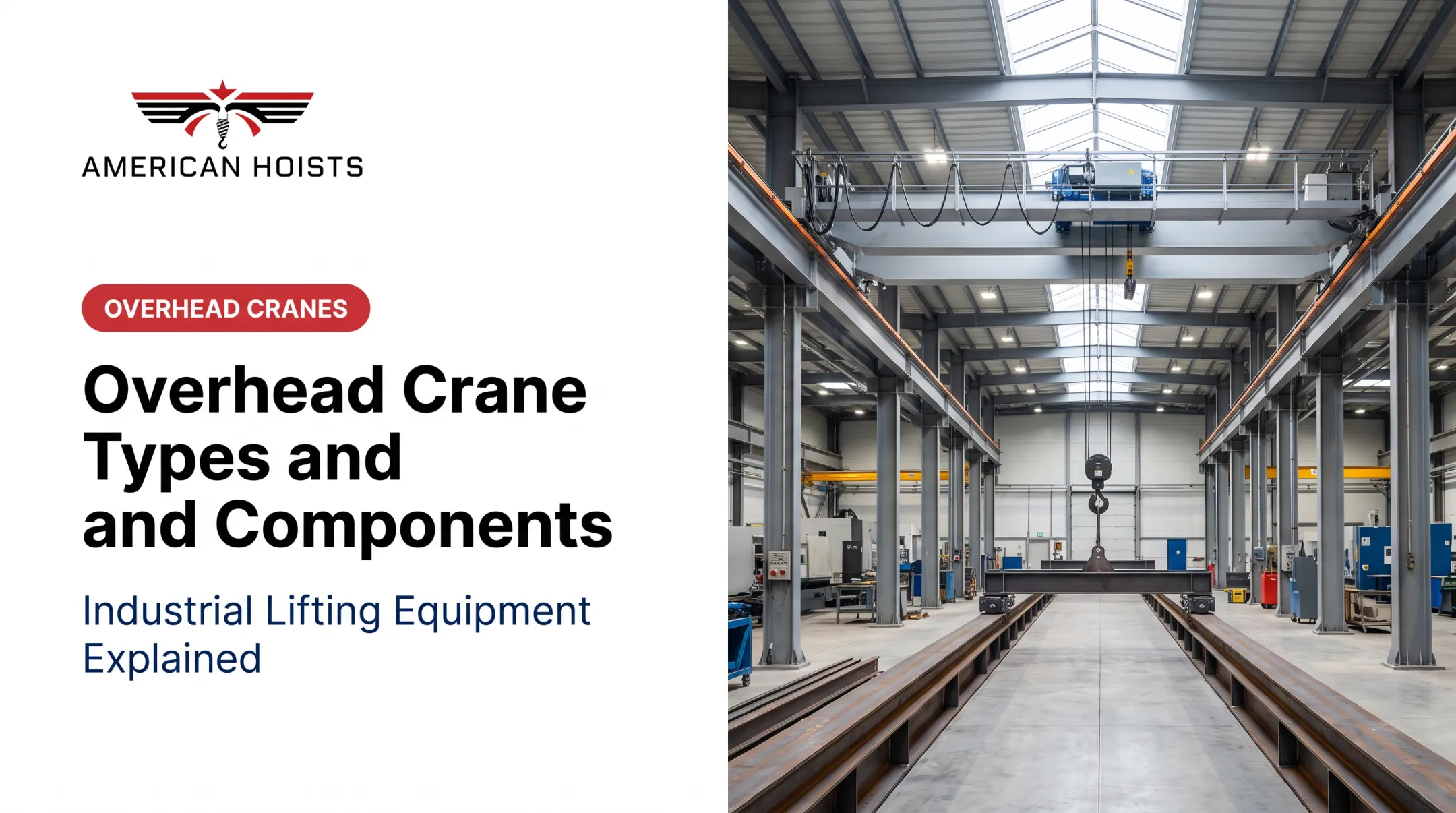
- Overhead/bridge cranes — Indoor systems where a bridge runs on a runway and a trolley/hoist lifts loads inside a rectangular bay.
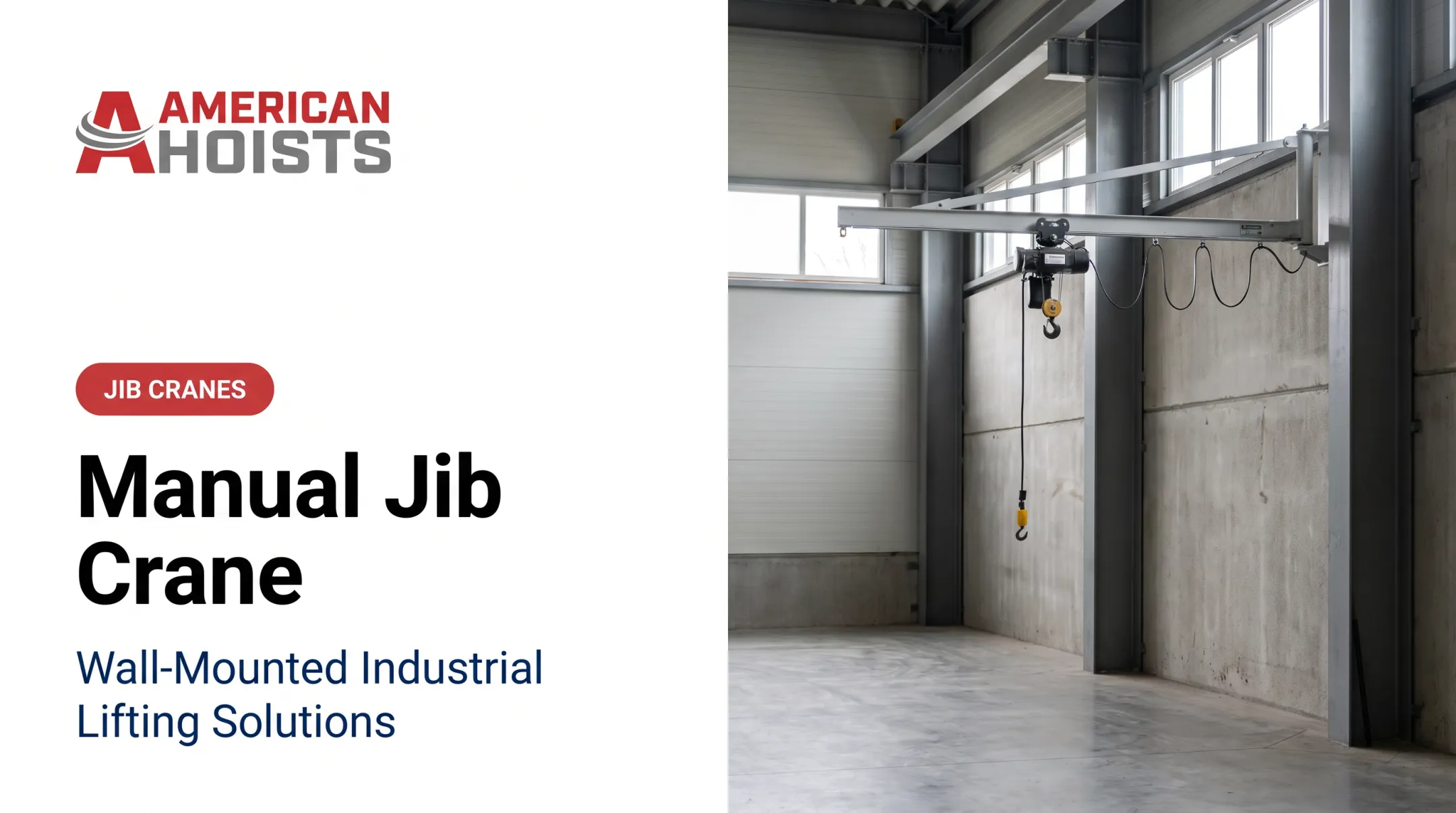
- Jib cranes — Wall-mounted or freestanding arms for workstations, loading docks, and localized production cells.
- Gantry cranes — Outdoor or wide-span frames used when overhead runways aren't practical, including shipyards and yards. American Hoists focuses on overhead/bridge and jib crane systems—plus the heavy-duty wire rope and chain hoists that power them—built for 24/7 manufacturing floors. That's a deliberate focus, not a gap in the catalog. Mobile and tower cranes solve construction problems; overhead systems solve production-floor problems.

How Crane Machines Work: Key Components
Every crane, regardless of type, relies on the same functional building blocks.
The Load-Bearing Structure
The boom (mobile/tower cranes) or bridge (overhead systems) determines reach. In overhead systems, the bridge travels along a runway while a trolley moves across the bridge, positioning the hoist anywhere within the bay.
The Hoist Mechanism
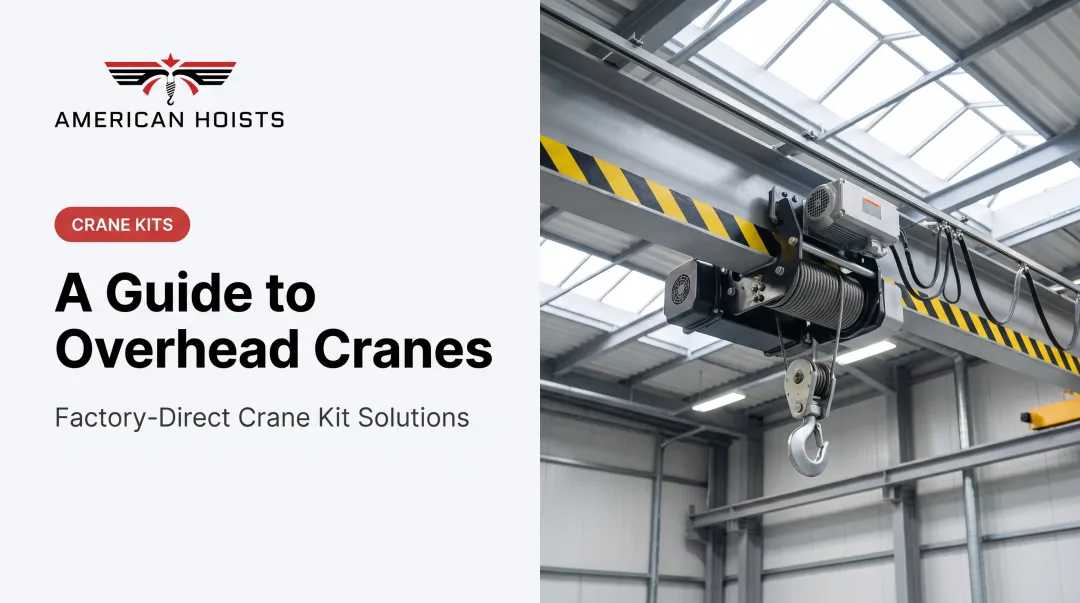
Wire rope or chain hoists raise and lower the load. Capacity varies by design—for example, Konecranes' CXT wire rope hoist lifts up to 80 tons, and its electric chain hoists handle loads up to about 5.5 tons (Konecranes).
American Hoists supplies both mechanisms:
- Harrington NER chain hoists from 1/8 ton to 20 tons
- Harrington RY or Starke SMW wire rope hoists from 3 to 15 tons
Stability Systems
Mobile cranes use outriggers and counterweights. Overhead systems rely on runway support instead, since the structure itself is fixed to the building.
Load Attachment
Hooks with safety latches are the final connection point. OSHA requires latches on crane hooks unless a qualified person determines otherwise, and the latch must retain rigging when slack (OSHA 1926.1433).

Lifting Capacity: How Much Weight Can a Crane Handle?
Capacity varies widely by crane type and configuration:
| Crane Type | Typical Capacity Range |
|---|---|
| Overhead/bridge crane | 0.25–400 tons |
| Gantry crane | 10–130 tons (some outliers higher) |
| Rough-terrain mobile | 30–165 tons |
| All-terrain mobile (Grove models) | 50–450 tons |
| Tower crane (Potain MDT 259) | Up to ~11 US tons at max radius |
Capacity isn't just about crane size. Working capacity also depends on:
- Boom length
- Counterweight
- Load radius
A crane rated for 100 tons at minimum radius might only lift a fraction of that fully extended. Manufacturers publish "nominal capacity" at minimum radius, so a headline number rarely applies to every configuration.

Can a crane lift a house? Not with standard equipment. Specialized heavy-lift cranes handle extreme jobs. The Taisun gantry crane hoisted a 20,133-metric-ton barge in a documented world record (Offshore magazine).
Closer to home, a 500-ton crane placed a prefab accessory dwelling unit in a Palo Alto backyard in 2021. That was a modular home-unit placement, not a whole-house relocation.
Industrial overhead and jib cranes used in manufacturing don't need those extremes. Most plant systems are rated from a fraction of a ton through the 10–20 ton range, matched to continuous-duty cycles rather than one-time heavy lifts.
Choosing the Right Crane Machine for Manufacturing Operations
Before buying, assess three things:
- Load weight — What's the heaviest single item you'll lift regularly?
- Lift height — How much vertical clearance does your bay or workstation offer?
- Frequency of use — Occasional lifts or continuous cycles?
CMAA duty-cycle classifications matter here. Class B service is 2-5 lifts per hour; Class D heavy service runs 10-20 lifts per hour with 10,000-hour bearing life expectations. Matching equipment to actual duty cycle prevents premature wear.

Why Overhead Cranes Win for Factory Settings
Mobile construction cranes move between sites and need setup time, outriggers, and often a crew. Overhead bridge cranes and hoists stay put and run continuously, which is exactly what factory and warehouse settings need. There's no re-rigging between lifts, and the runway system integrates directly into the building structure.
Durability matters just as much as capacity. A crane that goes down mid-shift costs real production time, not just repair fees—so match duty cycle carefully, and plan for fast replacement when something does fail.
Where American Hoists Fits In
American Hoists grew out of a decades-old overhead crane service company that got tired of watching customers wait a month for replacement hoists, only to receive the wrong specs.
That experience shaped the current model: American-made bridge cranes and hoists, 8-10 week shipping on fully assembled systems (versus up to 40 weeks elsewhere), and 10-day shipping on in-stock crane kits and jib cranes. Catalog ranges include:
- Electric chain hoists: 1/8 ton to 20 tons
- Electric wire rope hoists: 3 ton to 15 tons
- Bridge crane systems: 1/8 ton to 10 tons
- Crane kits (top-running and underhung): 1 ton to 20 tons
- Jib cranes: 1/4 ton to 5 tons
When a hoist fails mid-production, that turnaround speed matters. Plants have received replacement hoists as soon as the next day after a peak-production failure, limiting downtime. American Hoists backs that urgency with 24/7 specialist support and expedited shipping.
New to the platform? A $250 discount applies to your first hoist order, and a custom quote service is available for buyers who need help matching specs to their application before committing.
Frequently Asked Questions
What is a crane machine?
A crane machine lifts and moves heavy loads using hoists plus supporting structures such as bridges, booms, or jibs. Plants, warehouses, and job sites use them when loads exceed safe manual handling.
How much does a crane machine cost?
Overhead bridge crane systems generally run $40,000 to $100,000, depending on span and duty. American Hoists' catalog ranges from roughly $3,430 for smaller chain hoists to $51,450 for higher-capacity models, with fully assembled bridge cranes starting around $15,000.
What is the heaviest weight a crane can lift?
Specialized heavy-lift cranes have hoisted over 20,000 metric tons (about 22,000 US tons) in documented cases. Standard industrial cranes, including factory overhead systems, are rated for a set tonnage built for continuous duty—not extreme one-off lifts.
Can you use a crane to lift a house?
Standard industrial cranes aren't designed for that. Specialized heavy-lift or house-moving equipment handles full structure moves, and real-world jobs usually place prefabricated units rather than lift existing homes intact.
What are the different types of crane machines?
Main types include mobile, tower, telescopic, overhead/bridge, gantry, and jib cranes. Factories typically use overhead bridge and jib cranes; construction and ports lean on mobile, tower, and gantry models.
What is a hydraulic lift crane?
A hydraulic lift crane uses fluid-powered cylinders to extend and retract its boom, controlling both reach and lifting precision. This technology is common in mobile and telescopic cranes used on construction and rescue sites.