
That shift has moved plants away from manual handling toward conveyors, AGVs, robotics, and automated overhead lifting equipment. These systems now form the backbone of modern warehouses and factories.
This article breaks down the types of material handling automation, the technology behind them, their real benefits, and the challenges you'll face during implementation.
Key Takeaways
- Robotics, software, and equipment work together so materials move with minimal human intervention
- Core options span conveyors, AGVs/AMRs, ASRS, robotic arms, and automated overhead lifting equipment
- Plants gain higher throughput and accuracy while cutting labor dependency and injury risk
- Phased planning, baseline data, and reliable equipment partners drive successful rollouts
What Is Material Handling Automation?
Material handling automation uses equipment, robotics, and software to transport, store, and manage materials with little or no manual labor. The Material Handling Institute (MHI) describes it as a system combining manual, semi-automated, and fully automated mechanical interaction, plus the data collection and management that ties it all together.
Core objectives include:
- Increase efficiency by cutting cycle times and processing delays
- Reduce labor costs and risk tied to repetitive or hazardous tasks
- Improve accuracy through precision-controlled equipment
- Enhance safety by removing workers from dangerous lifting and transport work
Three Main Types of Material Handling Systems
Most facilities fall into one of three categories:
- Manual: workers physically move and position materials
- Semi-automated: equipment assists, but humans still control key decisions
- Fully automated: software and machines handle the entire process with minimal oversight
SSI SCHAEFER's industrial solutions overview confirms this same three-tier structure across material-flow operations. Most plants don't jump straight to fully automated. They migrate gradually, starting with the highest-volume or highest-risk workflows.

Types of Material Handling Automation Systems
Conveyor Systems
Conveyors move bulk or discrete goods continuously along a fixed path. They're ideal for high-volume, predictable workflows: packaging lines or sortation centers where the sequence rarely changes.
AGVs and AMRs
Automated Guided Vehicles (AGVs) and Autonomous Mobile Robots (AMRs) both move materials without a human driver, but they navigate differently.
- AGVs follow physical or virtual paths and stop when they detect an obstacle. MHI notes they're more common in predictable manufacturing environments.
- AMRs use onboard computing to generate routes on the fly and reroute around obstacles, making them better suited to less-predictable logistics settings MHI also points out that the line between the two is blurring. Most navigation systems, aside from fixed magnetic tape, can now support either vehicle type.
Automated Storage and Retrieval Systems (AS/RS)
AS/RS uses cranes, shuttles, or robotic arms to store and retrieve goods in high-density racking, often reaching heights a forklift can't touch. That design maximizes vertical space where floor space is limited.
Robotic Picking, Sorting, and Palletizing
Vision-guided robotic arms handle precision tasks like item picking, sorting by SKU, and palletizing for shipment. These systems reduce handling errors that come from fatigue or inconsistent manual technique.
Automated Overhead Lifting and Hoisting Equipment
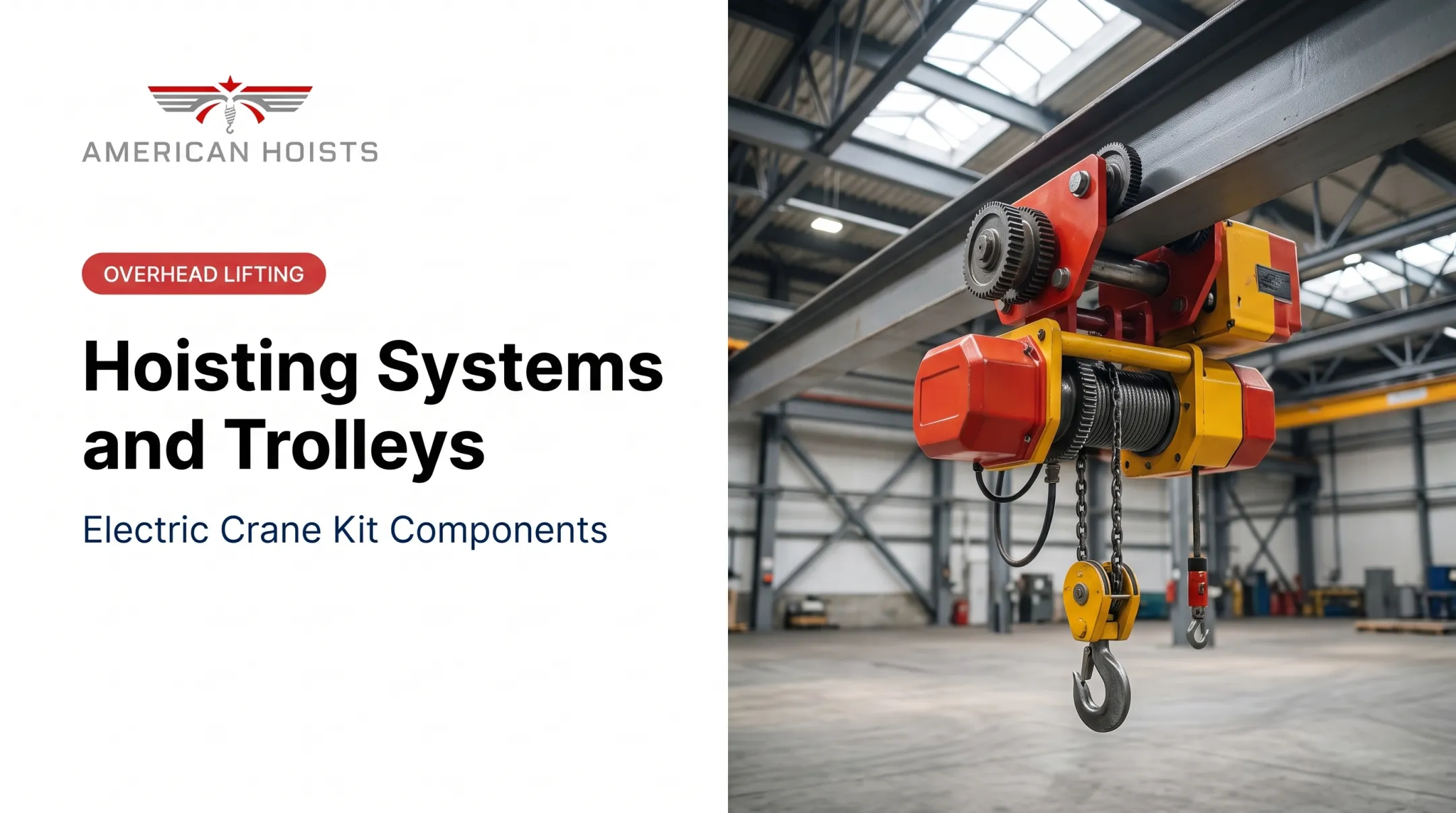
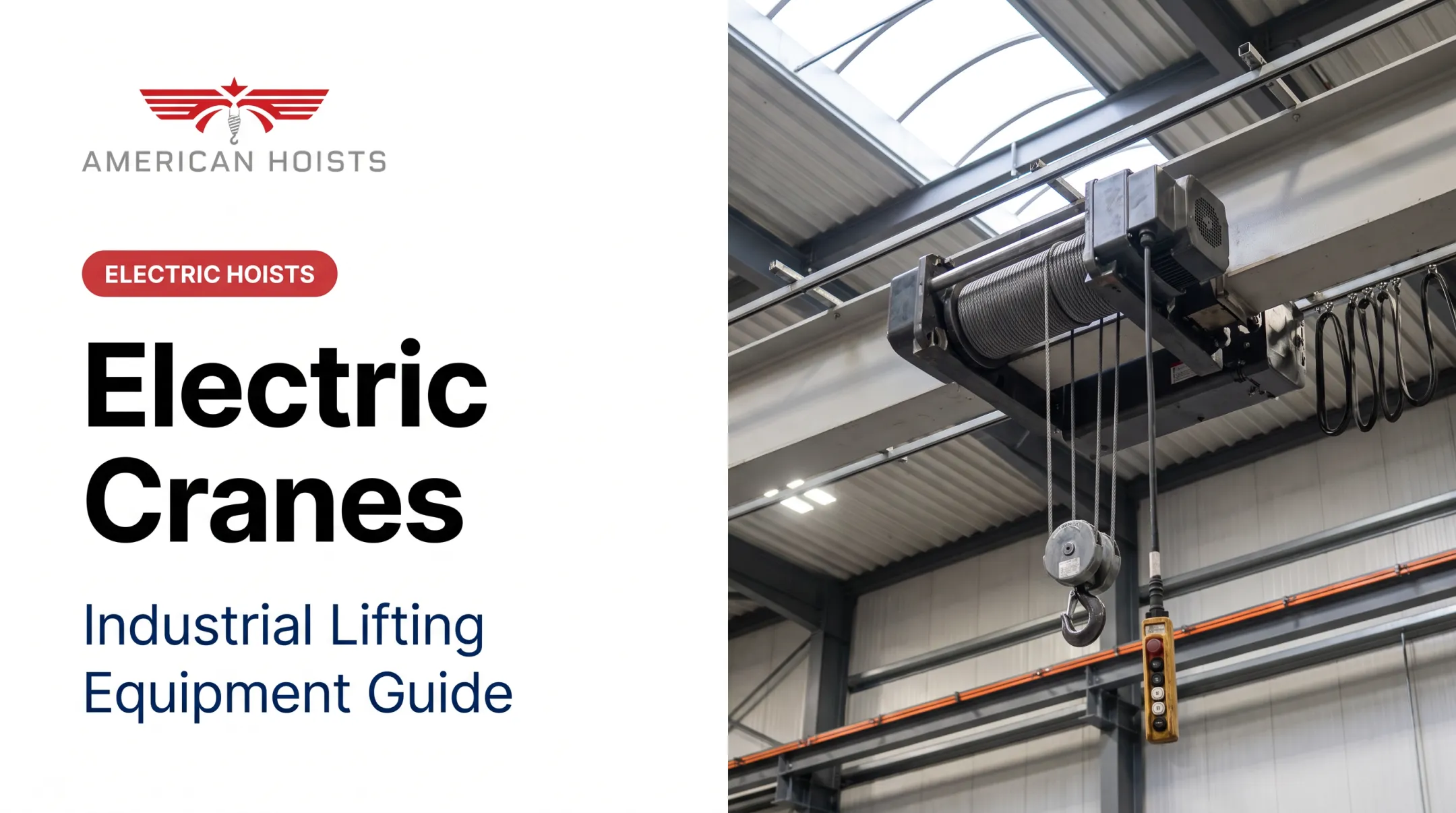
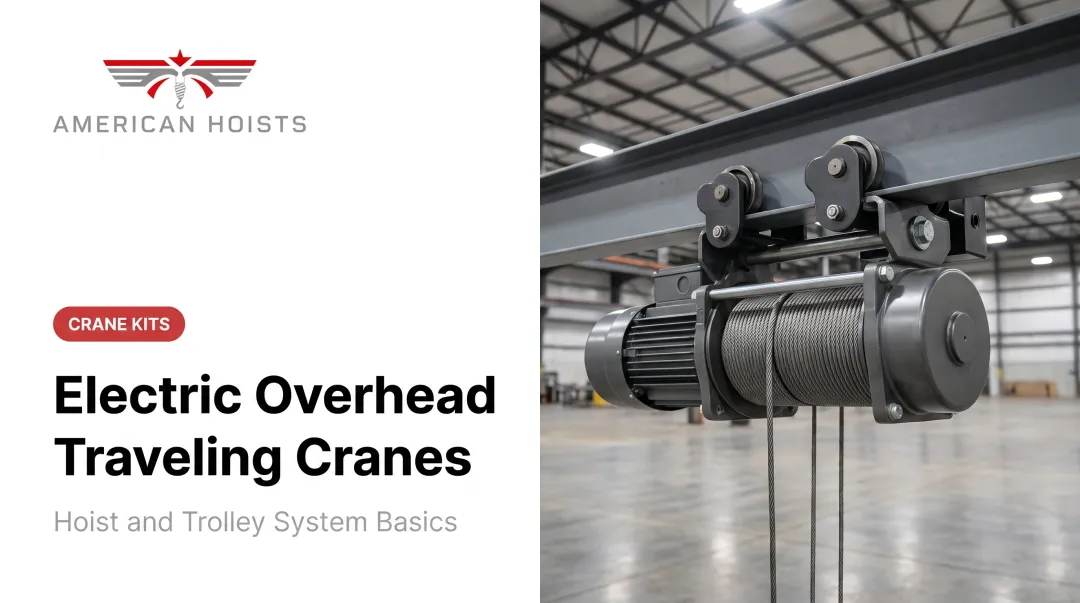
Modern bridge cranes and hoists now plug directly into automated material flow. Variable-frequency drives (VFDs) give crane motors far more precise speed control than older single-speed setups. IoT-enabled monitoring can track vibration, temperature, and error codes in real time, flagging wear before it causes downtime. American Hoists supplies Harrington HBC Series bridge cranes built for this kind of integrated flow:
- Chain-hoist models: 1/8 to 10 tons, with push, geared, or motorized trolleys and VFD-controlled three-motion travel
- Wire-rope models: 3 to 10 tons, for continuous heavy-duty cycles beside conveyor and robotic lines
An Integrated Example
Picture a distribution center where inbound pallets arrive on conveyors, get sorted into an AS/RS for high-density storage, and are later retrieved and handed off to a robotic arm for case picking and palletizing. SSI SCHAEFER's case study on United States Cold Storage describes a similar setup: a high-bay ASRS paired with robotic layer picking rated at roughly 200 layers per hour, adding over 7 million cubic feet of storage and 26,000 pallet positions.

Key Technologies Driving Automation
None of this works without the core technologies underneath. A few components make up the backbone:
- Sensors and actuators: Detect position, load, and movement, then convert controller commands into physical motion
- Controllers (PLCs): Run the coordination layer, executing logic across conveyors, sorters, and palletizers in real time
- IoT integration: Streams equipment data for live monitoring and predictive maintenance before failures stop the line
- AI and machine learning: Optimize routing, task scheduling, and inventory forecasting from live floor conditions
Those building blocks are why adoption is accelerating across U.S. warehouses and plants.
The Adoption Numbers Are Climbing Fast
The 2024 MHI Annual Industry Report, based on a survey of 1,675 supply-chain professionals, found predicted five-year adoption rates of 85% for both IoT and AI. Currently, 27% of respondents already use AI, and another 58% expect to adopt it within five years.
The same report cites concrete gains from robotics and automation:
- Trailer loading time cut from 40 minutes to 3 minutes
- Pallet damage down 40%
- Dock productivity up 400% in some cases

Benefits of Material Handling Automation
Throughput and Accuracy Gains
Documented warehouse-automation results show how fast throughput and accuracy can move when manual handling is automated:
- McKinsey example: 200% increase in picking productivity and a 50% reduction in cycle time
- Locus Robotics / Dental City: 300% higher picking productivity and 99% order accuracy after deploying AMRs
Safety Improvements
OSHA identifies mechanical lifting and material-transport devices as preferred engineering controls for reducing ergonomic hazards. Pulling workers out of repetitive lifting cuts ergonomic risk—the job overhead lifting equipment is built to handle.
American Hoists' fully assembled bridge crane systems pair an electric chain or wire-rope hoist with powered bridge and trolley motion. Controlled, VFD-driven travel replaces manual repositioning across 250 to 20,000 pounds of capacity.
Space Utilization
Vertical storage through AS/RS and overhead lifting frees up floor space that would otherwise go to aisles and staging areas. Facilities can add capacity without expanding the building footprint.
A note on the numbers: These productivity figures are case-specific results from individual implementations, not universal guarantees. Results depend on facility layout, product mix, and your current baseline.
Challenges and Best Practices for Implementation
The Real Costs and Complexity
McKinsey's research found that only about 20% of North American warehouses had adopted any automation, with high upfront costs and long payback periods cited as the biggest barriers. Integrating new automated systems with legacy equipment adds another layer of complexity most teams underestimate.
Workforce and Maintenance Realities
Automation doesn't eliminate the need for skilled people. It changes what they do. Expect to invest in:
- Training on new equipment interfaces and safety protocols
- Change management to ease the transition from manual roles
- Ongoing maintenance to prevent unplanned downtime
Equipment lead times and buying guidance matter just as much as the maintenance plan. When hoists and cranes sit on the critical path, American Hoists offers 24/7 specialist access by phone (817-779-4820) for technical questions, custom quotes, and purchasing guidance, plus a 2–4 week shipping window on chain hoists—practical details when you are sequencing a phased rollout.
A Phased Rollout Works Best
MHI recommends validating your data before you design anything. Specifically, target 95% inventory accuracy and 12-24 months of order history before committing to a system.
A sensible sequence looks like this:
- Assess needs: Audit current workflows, inventory accuracy, and throughput data
- Pilot test: Implement on one line or zone, not the entire facility
- Validate results: Confirm both operational and safety outcomes
- Scale gradually: Expand based on ROI and business continuity, not all at once

Frequently Asked Questions
Which equipment is best for automated material handling?
Match equipment to your layout and throughput. Conveyors fit high-volume, predictable flows; AGVs/AMRs handle flexible transport; automated storage and retrieval systems (ASRS) maximize vertical storage; and robotic arms handle precision picking. Overhead cranes and hoists cover heavy-duty lifting.
Can you provide an example of an automated material handling system?
A common setup pairs inbound conveyors with an ASRS for high-density storage, then a robotic arm for case picking and palletizing. Cold-storage warehouses and distribution centers use this combination to move product from receiving through storage and outbound staging.
What are the three main types of material handling systems?
Manual, semi-automated, and fully automated. Manual relies entirely on workers, semi-automated blends human oversight with equipment assistance, and fully automated runs with minimal human intervention.
What is material handling automation?
Material handling automation uses equipment, robotics, and software to transport, store, and manage materials. The goals are higher efficiency, lower labor costs, improved accuracy, and better safety.
What is AMHS in the semiconductor industry?
AMHS stands for Automated Material Handling System, used in semiconductor fabs to move wafer carriers (FOUPs) between stockers and tool load ports. It became essential once 300mm wafer handling made manual transport impractical.
What are the four types of automation?
Fixed (hard) automation performs repetitive single tasks, programmable automation runs via computer commands, flexible (soft) automation handles varied batch products, and integrated automation runs entire plants with minimal human involvement.