
Here's the issue: "overhead bridge" means two completely different things depending on who's asking. Civil engineers use it for structures that carry traffic over roads or railways. Plant managers and procurement teams use it to describe the horizontal beam on a bridge crane system.
This guide covers both meanings. We'll start with the traditional civil engineering definition, run through the classic bridge design types, then pivot to what "overhead bridge" means inside a manufacturing facility, including how American Hoists fits into that second category.
Key Takeaways
- "Overhead bridge" means two different things: road overpasses, or the girder on an industrial bridge crane.
- Civil versions create grade separation so two traffic paths cross without interfering.
- In plants, the overhead bridge is the traveling girder that lifts and moves materials.
- Manufacturers searching this term almost always need bridge crane guidance, not road structures.
- Load capacity, span, clearance, and duty cycle drive the right crane system choice.
What Is an Overhead Bridge?
In civil engineering, an overhead bridge is a structure built to carry pedestrian, road, or rail traffic over another road, railway, or right-of-way. It keeps those two traffic flows from crossing at the same level.
Regional Names for the Same Structure
The terminology shifts depending on where you are:
- North America: typically called an "overpass"
- British English: commonly called a "flyover"
- Other Commonwealth regions: often "overhead bridge" or "overbridge"
These terms describe the same basic concept. They're regional synonyms, not different structures.
Three Common Categories
Overhead bridges generally fall into one of three groups:
- Highway/road overpasses – carry vehicle traffic over another road or intersection
- Pedestrian overhead bridges – let people cross busy roads or rail lines safely on foot
- Railway overpasses – carry a road or rail line over a separate rail corridor

All three accomplish the same goal: grade separation. That means two paths of traffic (or people and vehicles) can cross without ever interfering with each other, which improves both safety and traffic flow.
One of the earliest documented examples, a railway overbridge on Oldham Road in Saddleworth, England, was built during the Huddersfield & Manchester Railway's 1845–1849 construction period. Grade separation has been solving traffic conflicts for close to two centuries.
What Are the Four Types of Bridges?
When people ask about the four types of bridges, they usually mean classic civil engineering designs based on how a structure carries load—not industrial overhead bridges.
Beam Bridges
The simplest design: a horizontal beam rests on supports at either end. Load creates bending in the beam, with tension forming along its lower edge. Beam bridges work well for shorter spans and are among the most common bridge types built worldwide because of their straightforward construction.
Arch Bridges
Arch bridges use a curved shape to carry load primarily through compression. Each section pushes against its neighbors and against the supports at either end, distributing weight efficiently. France's Pont du Gard, a multi-level Roman arch structure, shows how durable this design can be.
Truss Bridges
A truss bridge uses a framework of straight members arranged into rigid triangles. Each member carries either tension or compression along its length, giving the structure a high strength-to-weight ratio. Scotland's Firth of Forth Railroad Bridge, completed in 1890, is a classic large-scale example.
Suspension Bridges
For the longest spans, engineers turn to suspension design. Curved cables carry the deck's load in tension, then transfer that force down through towers into the ground. The Golden Gate Bridge, with a main span that set a length record when it opened in 1937, remains the design's most recognizable example.
Those four categories describe roadway and rail spans. Industrial overhead bridges serve a different job inside plants and warehouses, which is what the rest of this guide covers.
Overhead Bridges in Industrial and Manufacturing Settings
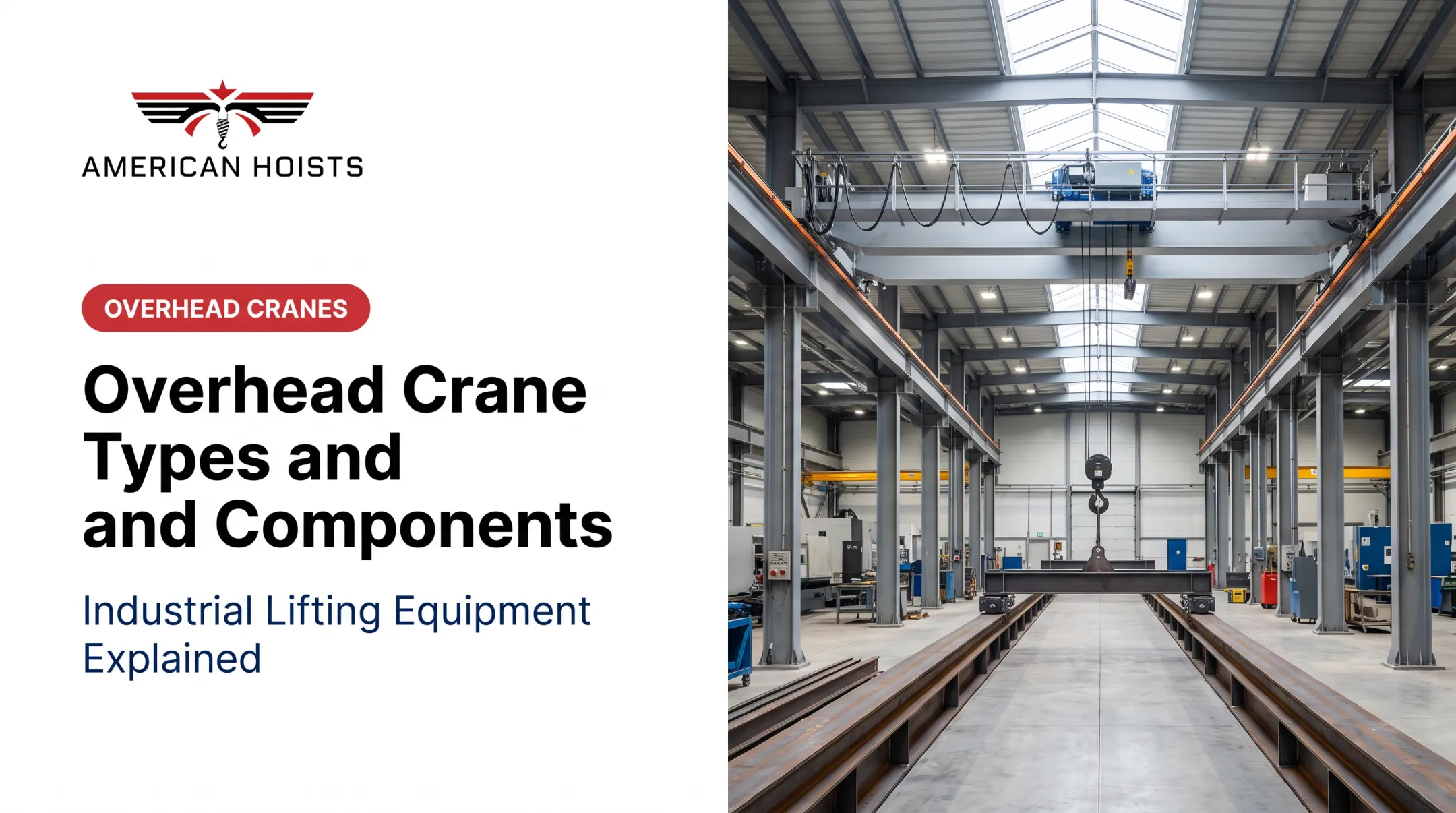
Inside a factory or warehouse, "overhead bridge" means something else entirely. It refers to the horizontal beam of an overhead crane system that travels along elevated runways to move heavy loads.
Basic Anatomy of an Overhead Bridge Crane
OSHA's regulatory definition breaks the system into four core components:
- Runway – the rails, beams, and framework the crane travels along
- Bridge/girder – the structural beam that spans the work area and carries the trolley
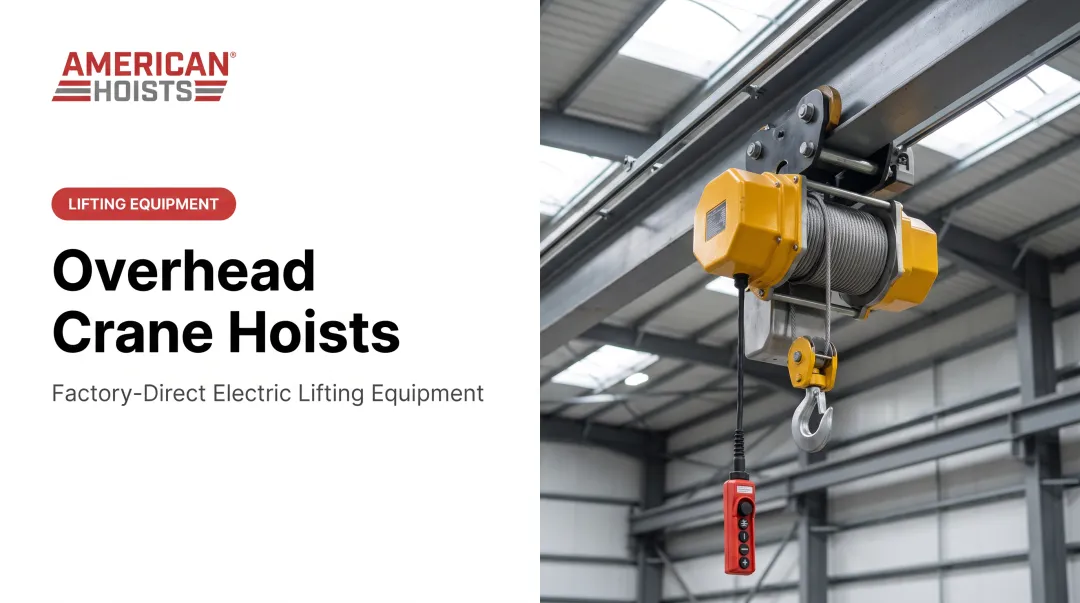
- Trolley and hoist – the unit that travels across the bridge and does the actual lifting
- End trucks – the wheeled assemblies that let the bridge move along the runway
Single Girder vs. Double Girder
The two configurations serve different needs:
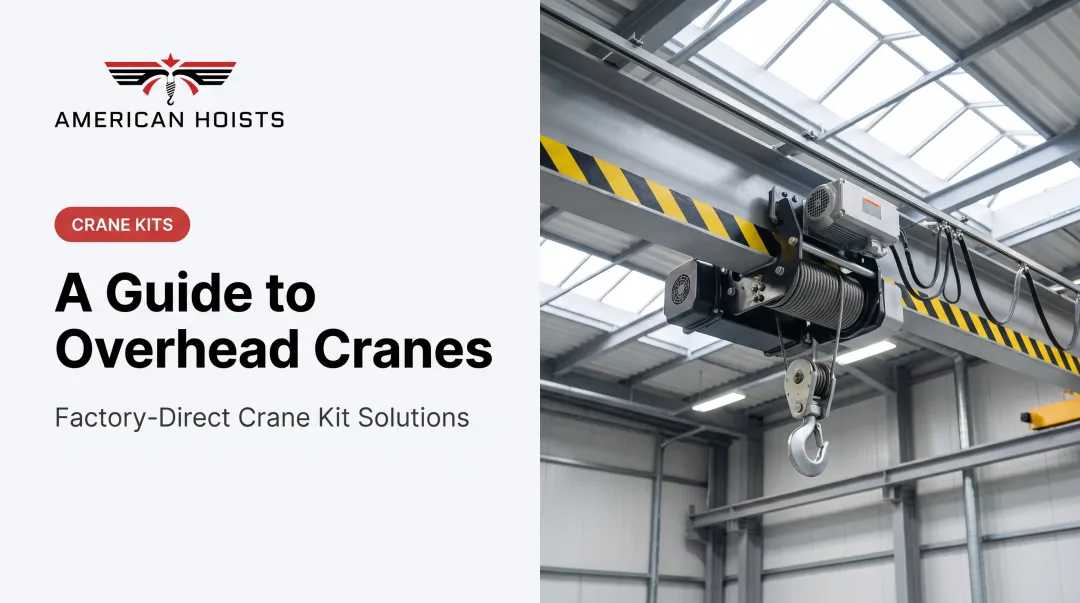
- Single-girder cranes use one bridge beam, often supported from a ceiling runway or a hanging structure. They cost less and work well for lighter loads and shorter spans.
- Double-girder cranes use two bridge beams set on top of the runway end trucks, with the hoist mounted above. This arrangement adds headroom and lets the hook travel higher between the girders, better suited for heavier capacity ranges.

American Hoists' crane kits reflect this split directly. The underhung kit covers 1-10 tons across 20-80 ft spans, while the top-running kit handles 2-20 tons across 20-84 ft spans. Both ship in about 10 days.
Unlike a civil overhead bridge that primarily carries static or rolling traffic loads, an industrial bridge is engineered to lift, suspend, and reposition dynamic loads repeatedly, sometimes hundreds of times per shift.
That repeated dynamic loading is a different engineering challenge. American Hoists supplies crane kits, Harrington NER chain hoists, and Harrington RY and Starke SMW wire rope hoists built for American manufacturing floors.
Civil Overhead Bridges vs. Overhead Bridge Cranes: Key Differences
The two structures share a name, but almost nothing else.
| Factor | Civil Overhead Bridge | Overhead Bridge Crane |
|---|---|---|
| Purpose | Moves traffic or pedestrians over a road/rail line | Lifts and repositions materials within a facility |
| Location & scale | Outdoor infrastructure spanning roads, rivers, or rail corridors | Indoor structure spanning a work area or production line |
| Load type | Vehicle, pedestrian, or rail traffic (rolling loads) | Suspended loads, lifted and moved on demand |
| Movement pattern | Fixed path, continuous flow | Frequently repositioned, start-stop cycles |
Span length alone can look similar on paper. A highway overpass might cross a four-lane road; an industrial bridge crane might cover a 60-foot production bay. The crane’s job is different: it lifts, moves, and sets down loads dozens of times a day.
If the context is a plant, warehouse, or production line, “overhead bridge” almost always means the crane—not a civil overpass.
Benefits of Overhead Bridge Cranes for Manufacturing Operations
For manufacturers, the case for overhead bridge cranes comes down to floor space, labor, and safety.
Reclaiming Floor Space
Ground-level material handling equipment eats up aisle space and creates congestion. An overhead bridge crane operates above the work area, using runways instead of floor footprint. That frees up square footage for production lines, staging, or storage.
Cutting Handling Time and Downtime
Moving heavy materials manually or with repeated forklift trips slows everything down. A bridge crane lifts and repositions loads directly along a fixed path, which supports continuous production and keeps output moving.
Safety Gains That Matter
Manual material handling carries real risk. According to NIOSH's Engineering Controls Database, roughly half of all compensable low-back pain cases are tied to manual-material-handling tasks, with lifting implicated in 37% to 49% of cases.
The same source notes that better job design, including mechanical handling equipment, can reduce compensable low-back injuries by up to one-third.
Bridge cranes address this directly:
- Fewer forklifts crossing walkways where pedestrians work
- Controlled, repeatable lifting paths instead of manual carrying
- Reduced strain injuries from repetitive lifting
Built for Continuous Operation
Heavy-duty manufacturing running multiple shifts needs equipment rated for constant use, not occasional lifts. The hoist on that bridge does the real work. Harrington NER chain hoists, available through American Hoists, carry a 60-minute duty rating, H4 classification, and Class B insulation—specs meant for plants that run without long gaps between lifts.
For shops building or upgrading a system, American Hoists supplies crane kits plus standalone Harrington and Starke electric hoists, with expedited shipping and specialists available 24/7 to match capacity and duty cycle to the bay.
How to Choose the Right Overhead Bridge Crane System
Picking the right setup comes down to four factors.
- Load capacity – Match the rated load to your heaviest anticipated lift, not just your average one. Nameplate ratings are non-negotiable safety limits.
- Bridge span – Measure the center-to-center distance between your runway rails. American Hoists' kits cover spans from 20 ft up to 84 ft, depending on configuration.
- Building height and clearance – Confirm your overhead clearance and how much lift height you actually need. Top-running configurations generally offer more headroom than underhung setups.
- Duty cycle – How often will this crane run, and at what percentage of rated capacity? A crane used five times a day needs different specs than one running continuously across three shifts.

Matching Hoist Type to Application
Wire rope hoists and chain hoists aren't interchangeable:
- Chain hoists cover a wide range (1/8 to 20 tons) and suit slower, lower-headroom applications.
- Wire rope hoists run faster (speeds up to roughly 26 FPM) and handle heavier, higher-lift applications, typically 3 to 15 tons.
Hoist choice also affects lead time:
- Chain hoists: typically 2–4 weeks
- Wire rope hoists: next-day to 10–12 weeks, depending on the model
- Crane kits: standard 10 days
Span, clearance, duty class, and hoist type all interact, so a custom quote before ordering is worth it. American Hoists offers $250 off your first hoist order, plus specialist consultation so the system matches your facility layout and workflow.
Frequently Asked Questions
What is an overhead bridge?
In civil engineering, it's a structure that carries pedestrian, road, or rail traffic over another road or railway. In manufacturing, the same term usually refers to the beam component of an overhead crane system.
What are the four types of bridges?
The four classic engineering types are beam (simple horizontal support), arch (load carried in compression), truss (triangular framework for strength), and suspension (cables and towers for long spans).
What is an overhead bridge crane?
An overhead bridge crane is an industrial lifting system with a horizontal girder that travels along elevated runways. A hoist and trolley move across that bridge to lift and reposition loads in the work area.
How much weight can an overhead bridge crane lift?
Capacity varies widely by design. American Hoists' catalog spans 1/8 ton to 20 tons across chain hoists, wire rope hoists, and crane kits. Exact capacity depends on span, girder type, and hoist rating—a custom quote confirms the right specs.
What's the difference between an overhead crane and a gantry crane?
An overhead crane runs on runways fixed to the building's structure. A gantry crane's bridge is instead supported by freestanding legs that roll on rails at floor level, no ceiling-mounted runway required.
Why do manufacturers use overhead bridge cranes instead of forklifts?
Bridge cranes clear walkway congestion and move heavy loads on controlled, repeatable paths. They keep aisles open—something ground-level forklifts often can't do.